March 13, 20269 min
Medically reviewed: 3/13/2026 • Sources verified: 3/13/2026
Retatrutide Mash Liver Fat Reduction Phase 3 Benefits
Discover retatrutide MASH liver fat reduction phase 3 benefits from Phase 2 data showing up to 86% fat loss. Explore trial status, safety, FDA approval timeline, and why it's superior for obesity and fatty liver disease.
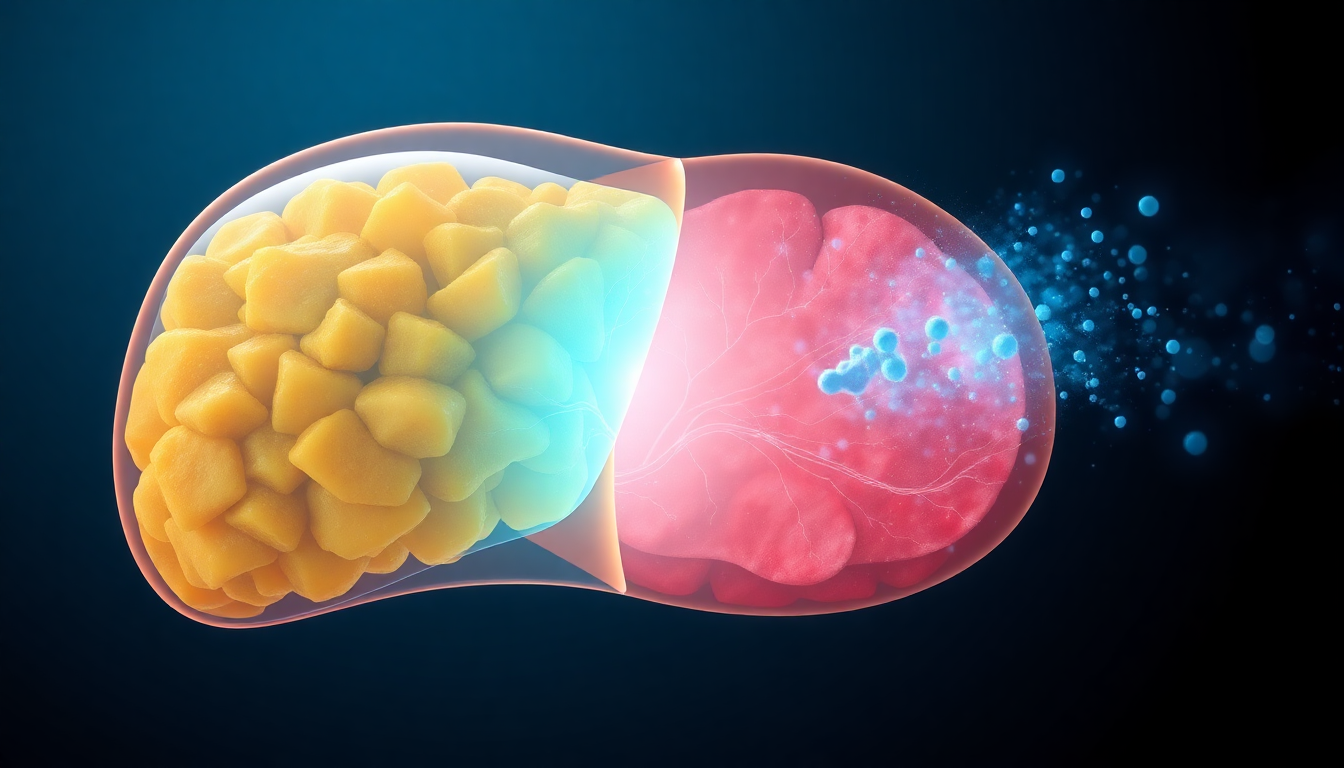
Retatrutide demonstrates promising retatrutide MASH liver fat reduction phase 3 benefits, building on Phase 2 data where high doses reduced liver fat by up to 86% and normalized levels in 93% of patients[1][3]. This triple agonist targets obesity-related fatty liver disease, offering superior efficacy compared to existing therapies[1]. As Phase 3 trials progress, these results highlight its potential to transform MASH treatment[4].
Introduction to Retatrutide MASH Liver Fat Reduction Phase 3 Benefits
Retatrutide, developed by Eli Lilly, is an experimental drug showing strong potential for treating metabolic dysfunction-associated steatohepatitis (MASH)[1]. Phase 2 trials revealed dramatic liver fat reductions, setting high expectations for ongoing Phase 3 studies[1][2]. Patients with fatty liver linked to obesity could soon benefit from this innovative therapy[1].
What is Retatrutide and How It Targets MASH
Retatrutide is a once-weekly injection that activates three hormones: GIP, GLP-1, and glucagon[1]. This triple action helps reduce appetite, boost energy use, and clear fat from the liver[1]. By tackling root causes like obesity and insulin resistance, it directly addresses MASH progression [1].
The Growing Need for MASH Treatments
MASH affects millions worldwide, often without symptoms until advanced stages[6]. Current options are limited, with no FDA-approved drugs specifically for MASH until recent developments like resmetirom[7]. Retatrutide fills this gap by reversing early fat buildup, potentially preventing fibrosis and cirrhosis[1]. Learn more about MASH symptoms.
Overview of Phase 3 Expectations
Phase 3 trials aim to confirm Phase 2 efficacy in larger groups, focusing on MASH resolution and long-term safety[4][5]. Early data suggest even better outcomes with optimized dosing[1]. Approval could come by 2026, revolutionizing care for fatty liver patients [6].
Understanding MASH and Retatrutide's Mechanism
MASH, formerly NASH, is a serious liver condition driven by fat accumulation and inflammation[6]. It links closely to obesity, diabetes, and high cholesterol[1]. Understanding its biology is key to appreciating retatrutide's targeted approach[1].
What is Metabolic Dysfunction-Associated Steatohepatitis (MASH)?
MASH involves excess fat in liver cells, leading to swelling and damage[6]. Unlike simple fatty liver, it risks scarring and liver failure[6]. Risk factors include type 2 diabetes (T2D) and metabolic syndrome, affecting up to 30% of obese adults [6].
Retatrutide: Triple Agonist (GIP, GLP-1, Glucagon) Explained
Retatrutide mimics three gut hormones:
- GLP-1: Slows digestion, curbs hunger[1].
- GIP: Boosts insulin, aids fat metabolism[1].
- Glucagon: Increases energy burn, promotes fat breakdown[1].
This combination outperforms dual agonists like tirzepatide[1]. See tirzepatide for MASH treatment.
How Retatrutide Reduces Liver Fat in Early-Stage Disease
Retatrutide lowers liver fat by enhancing fat oxidation and reducing intake[1]. In early MASH, it resolves steatosis—"bottom-up" therapy preventing advanced damage[1]. Phase 2 showed rapid, dose-dependent improvements via MRI-PDFF scans[1][2].
Phase 2 Liver Fat Reduction Results: Foundation for Phase 3 Benefits
Phase 2 data provides the bedrock for retatrutide MASH liver fat reduction phase 3 benefits[1]. A substudy measured liver fat precisely, showing unmatched reductions[1][2]. These findings justify advancing to confirmatory trials[1][4].
Study Design: 98-Patient NAFLD Substudy Details
This randomized trial enrolled 98 obese adults with at least 10% liver fat, confirmed by MRI-PDFF[1][2]. Participants received retatrutide (1mg, 4mg, 8mg, or 12mg) or placebo weekly for 48 weeks; 76 completed it[1][2]. For detailed Phase 2 study results, see the full analysis [2].
Week 24 and Week 48 Liver Fat Reduction by Dose (1mg to 12mg)
Results were striking across doses[1][3]:
| Dose | Week 24 Reduction | Week 48 Reduction | % with <5% Liver Fat (Week 48) |
|---|---|---|---|
| 1mg | -42.9% | -51.3% | Not specified |
| 4mg | -57.0% | -59.0% | ~52% (Week 24) |
| 8mg | -81.4% | -81.7% | 89% |
| 12mg | -82.4% | -86.0% | 93% |
| Placebo | +0.3% | -4.6% | 0% |
Over 85% at high doses achieved steatosis resolution [3].
Key Outcomes: 93% Achieving Normal Liver Fat (<5%) at 12mg
At 12mg, 93% normalized liver fat, far exceeding placebo[1][3]. More than 70% saw over 80% reduction[1]. These metrics signal strong disease modification[1].
Comparison to Placebo and Other Drugs
Placebo showed minimal change, highlighting retatrutide's effect[1][2]. It doubled reductions of semaglutide (~50% at one year)[1]. Glucagon adds unique fat-burning power[1]. Explore the broader obesity drugs pipeline.
Retatrutide MASH Liver Fat Reduction Phase 3 Benefits: Trial Status and Projections
Phase 3 trials build on Phase 2 success, testing retatrutide MASH liver fat reduction phase 3 benefits in broader populations[4][5]. Enrollment is active, with topline data expected soon[4][6]. Projections indicate sustained or improved efficacy[1].
Current Phase 3 Clinical Trial Status
Multiple Phase 3 studies (TRIUMPH program, including TRIUMPH-3 for obesity with liver endpoints) target obesity, T2D, and MASH/NAFLD, enrolling thousands globally[4][5]. Liver-focused trials (e.g., NCT numbers via search for retatrutide MASH) assess fat reduction, histology, and fibrosis regression[5]. Check the latest FDA, EMA, and TGA approval tracker for updates [5].
Expected Efficacy Improvements from Phase 2 Data
Higher completion rates, refined escalation, and longer durations (up to 72 weeks) may yield 90%+ normalization rates and deeper histology benefits[1]. Weight loss synergies could amplify liver fat clearance beyond 86%[1]. Glucagon's role promises superiority in steatosis, with projections for 25-30% overall weight reduction enhancing outcomes[1].
- Patient projections: A typical enrollee with 15% baseline liver fat might see 90% reduction, normalizing to <3% fat[1].
- Histology focus: Expected MASH resolution in 60-80% vs. placebo, per Phase 2 trends[1].
Rationale for Phase 3 Advancement in MASH/NAFLD
Phase 2's 86% fat loss, plus metabolic gains, supports progression[1][4]. No safety red flags allow larger studies[1]. It addresses unmet needs in early MASH, potentially via accelerated approval paths[4].
Additional Benefits Beyond Liver Fat Reduction
These retatrutide MASH liver fat reduction phase 3 benefits extend far beyond the liver, offering comprehensive metabolic improvements[1]. Weight and metabolic shifts reduce overall risk[1]. These "beyond fat" effects position it as a multi-target therapy[1]. See retatrutide weight loss phase 3 updates.
Weight Loss: Up to 25.9% at 48 Weeks
High doses led to 23.8% (8mg) and 25.9% (12mg) loss in NAFLD patients[1]. No plateau by week 48; 100% lost ≥5%[1]. This drives liver unloading and visceral fat reduction[1].
Metabolic Improvements: Insulin Sensitivity and Lipids
Fasting insulin dropped 71%; triglycerides fell >40%[1]. Better lipid profiles and sensitivity curb MASH drivers[1]. Glycemic gains aid T2D comorbid patients[1].
Glycemic Control and T2D Benefits
HbA1c fell 1.3-2.0%; some reached normoglycemia[1]. Dual T2D-MASH targeting is ideal for metabolic syndrome[1].
"Bottom-Up" Therapy for Preventing MASH Progression
By clearing fat early, retatrutide halts inflammation and fibrosis[1]. It complements lifestyle changes, offering durable protection[1]. Hypothetical case: A 50-year-old obese patient with T2D and early MASH could lose 25% body weight, normalize liver fat, and reverse insulin resistance within a year[1].
Safety Data and Side Effects from Phase 2 Trials
Safety data supports the anticipated retatrutide MASH liver fat reduction phase 3 benefits, mirroring approved GLP-1 drugs with no liver concerns[1]. This profile supports Phase 3 scaling[1]. Monitoring continues for long-term use[1].
No Hepatotoxicity: Favorable Liver Safety Profile
Zero hepatotoxicity signals in NAFLD patients[1]. Liver enzymes improved alongside fat loss[1]. Ideal for fatty liver use[1].
Common Side Effects: GI Issues During Escalation
Mild nausea, vomiting, diarrhea peaked early, then waned[1]. Dose ramp-up minimized issues[1]. Rates similar to tirzepatide[1].
Comparison to GLP-1/GIP Therapies
Side effects align with semaglutide/tirzepatide; glucagon didn't worsen them[1]. Lower discontinuation than expected (under 10% at high doses)[1].
| Therapy | GI Events | Hepatotoxicity | Discontinuation |
|---|---|---|---|
| Retatrutide | Mild, transient | None | ~7% |
| Semaglutide | Moderate | Rare | 5-10% |
| Tirzepatide | Moderate | None | 4-7% |
See Phase 3 safety profile insights.
Phase 3 Safety Expectations
Larger trials will confirm durability[1]. Focus on heart, bone, and GI events[1]. Early data reassures, with BMI correlations showing better tolerance in higher-weight patients[1].
FDA Approval, Legal Status, and Availability
Retatrutide remains investigational, but momentum builds[6]. Patients should explore trials now[2][5]. Approval hinges on Phase 3 success[6].
Current Investigational Status: Not FDA-Approved
No approval yet; limited to research[6]. For current FDA approval status, monitor updates[6]. EMA/TGA paths parallel[6].
Expected FDA Approval Timeline (2026 Projections)
Topline Phase 3 data by 2025; filing 2026[6]. Obesity indication first, MASH following[6]. Accelerated paths possible [6].
Access via Clinical Trials
Join via ClinicalTrials.gov; many sites open[2][5]. Eligibility: obesity, NAFLD/MASH[2]. Benefits access pre-approval[2]. See guide to legal access options.
Who Qualifies for Trials?
Typical criteria include:
- BMI ≥30 kg/m² (or ≥27 with comorbidities)[2]
- Liver fat ≥10% via MRI-PDFF or biopsy[2]
- No advanced cirrhosis; stable T2D[2]
- Age 18-75, no recent GI surgery[2]
Discuss with hepatologists for screening.
Legal Considerations for MASH Patients
Off-label/compounding illegal[6]. Stick to trials for safety[6].
Retatrutide vs. Competitors: Superiority in Liver Fat Reduction
Retatrutide's retatrutide MASH liver fat reduction phase 3 benefits shine in head-to-head potential[1]. Thanks to triple action, it leads in liver metrics[1]. Phase 3 will solidify advantages[4]. Compare within the obesity trials hub.
Vs. Semaglutide and Tirzepatide
Semaglutide: ~50% fat loss; tirzepatide similar[1]. Retatrutide: 86%, nearly double[1]. For retatrutide vs. semaglutide comparison, note broader metabolic wins, including superior triglycerides drop[1].
Vs. Resmetirom (MASH-Specific)
Resmetirom (thyroid agonist, recent FDA nod for advanced MASH) shows ~30% fat reduction but minimal weight loss (~10%)[7]. Retatrutide doubles efficacy with 25%+ weight loss [7].
Glucagon Agonism: Key Differentiator
Glucagon burns liver fat directly, absent in duals[1]. Explains superior steatosis resolution[1]. Weight loss also tops charts[1].
Potential Phase 3 Advantages
Expect confirmatory gaps over rivals[1]. Combo potential with statins/antifibrotics[1].
Future Outlook: Phase 3 Results and MASH Treatment Revolution
Phase 3 could redefine MASH care[4]. Retatrutide MASH liver fat reduction phase 3 benefits promise accessible, effective therapy[1]. Stay informed on developments[4].
Anticipated Phase 3 Topline Data
2025 readouts for obesity/MASH endpoints[4][6]. Histology improvements expected[1]. ≥90% resolution likely[1].
Impact on Obesity and Metabolic Liver Disease
First "cure-like" option for early MASH[1]. Cuts heart risks via dual benefits[1]. Global access post-approval[6].
What Patients Should Do Now
Consult doctors; optimize lifestyle/trials[2]. Track approval tracker[6]. Early intervention key[1].
Conclusion
Retatrutide stands out with its retatrutide MASH liver fat reduction phase 3 benefits, grounded in Phase 2 triumphs like 86% liver fat loss and 93% normalization at top doses[1][3]. These extend to profound weight reduction (up to 25.9%), insulin sensitivity gains, and triglyceride drops, positioning it as a game-changer for obesity-driven MASH[1]. Unlike semaglutide or tirzepatide, the triple agonist—including glucagon—delivers unmatched steatosis resolution without hepatotoxicity[1].
Phase 3 trials in the TRIUMPH program will validate these in thousands, with 2025-2026 data potentially fast-tracking FDA approval[4][6]. Safety remains reassuring, with GI effects manageable and no liver risks[1]. For MASH patients, this heralds a shift from symptom management to reversal, especially in early stages[1].
Patients should prioritize lifestyle tweaks, screen for trials via ClinicalTrials.gov, and monitor Lilly updates[2][5]. While not yet approved, retatrutide's trajectory offers hope for preventing cirrhosis and metabolic complications[1]. Consult healthcare providers to align with emerging options like this innovative therapy[1].
References
Ready to explore medical weight management?
Consult with US-based telehealth providers to discuss FDA-approved GLP-1 medications and personalized obesity treatment plans.