10 min
Medically reviewed: • Sources verified:Retatrutide Liver Fat Reduction Fatty Liver Reversal Trials
Discover retatrutide liver fat reduction fatty liver reversal trials. Phase 2 NAFLD substudy shows up to 86% liver fat reduction and 93% normalization rates. Explore efficacy, safety, ongoing Phase 3 TRIUMPH trials, and FDA approval timeline.
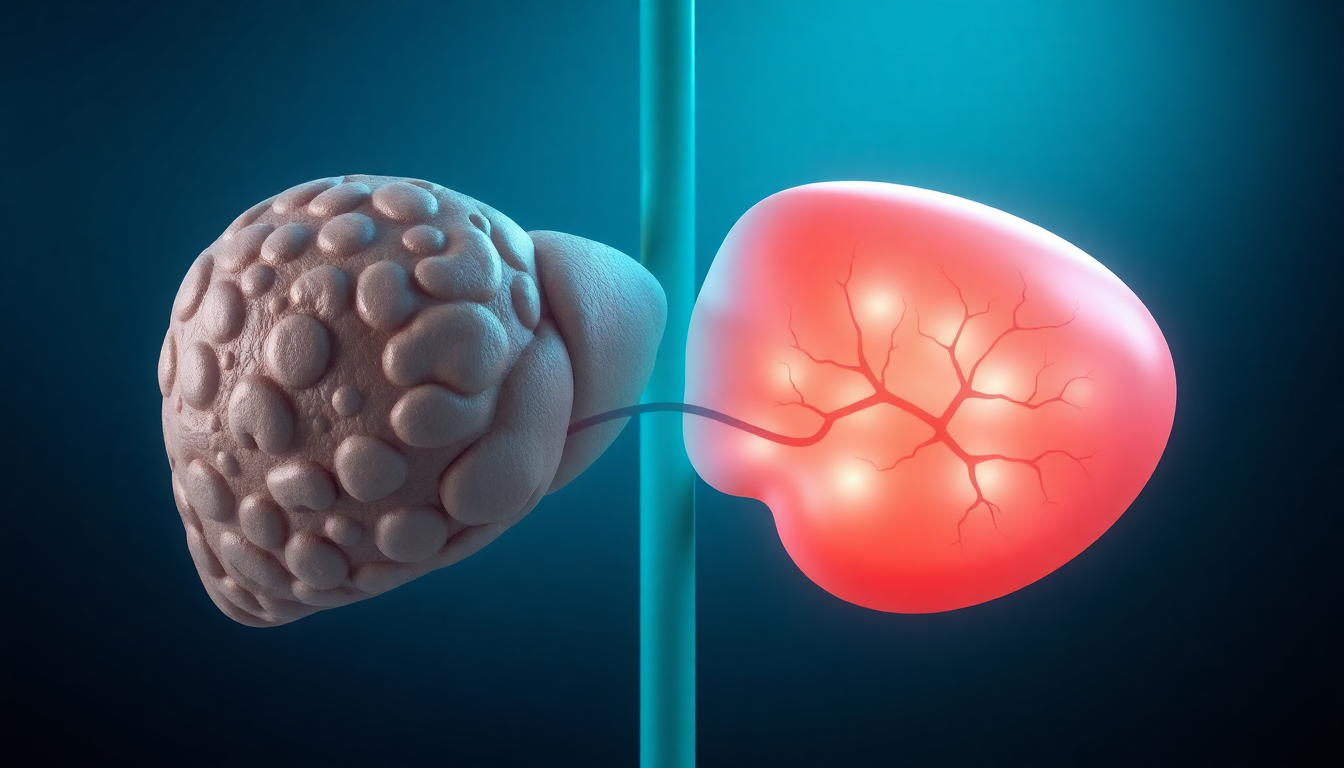
Retatrutide liver fat reduction fatty liver reversal trials have delivered groundbreaking phase 2 results, achieving up to 86% mean liver fat reduction and 93% normalization rates at the highest dose after 48 weeks [1][2]. These outcomes from a dedicated NAFLD substudy underscore retatrutide's potential to reverse metabolic dysfunction-associated steatotic liver disease (MASLD)—formerly known as nonalcoholic fatty liver disease (NAFLD)—in obese patients [1][2]. As phase 3 TRIUMPH trials progress, this triple agonist could transform fatty liver treatment [3].
Introduction to Retatrutide Liver Fat Reduction Fatty Liver Reversal Trials
Retatrutide liver fat reduction fatty liver reversal trials represent a major advance in addressing nonalcoholic fatty liver disease (NAFLD), now termed metabolic dysfunction-associated steatotic liver disease (MASLD), which impacts up to 75% of obese individuals [6]. Without effective therapies, NAFLD often progresses to nonalcoholic steatohepatitis (NASH), fibrosis, and cirrhosis, raising risks for liver failure and cancer [6]. Retatrutide's trial data offers hope for early reversal through profound fat reduction [1][2].
What is Retatrutide and Its Mechanism of Action
Retatrutide, developed by Eli Lilly as LY3437943, is a once-weekly subcutaneous injection acting as a triple receptor agonist for glucose-dependent insulinotropic polypeptide (GIP), glucagon-like peptide-1 (GLP-1), and glucagon [1]. This unique combination suppresses appetite, slows gastric emptying, enhances insulin sensitivity, and promotes direct lipolysis in the liver [1].
- GIP and GLP-1 mimic gut hormones to reduce food intake and improve glucose control [1].
- Glucagon agonism uniquely drives hepatic fat oxidation, key for NAFLD reversal [1][2].
NEJM phase 2 results detail its mechanism [1].
Why Retatrutide Targets NAFLD/MASLD/NASH
NAFLD arises from excess fat accumulation in liver cells due to obesity, insulin resistance, and poor lipid metabolism [6]. Retatrutide addresses root causes by slashing visceral and liver fat while improving metabolic markers [1][2]. Experts note it "wiped out" fat in early-stage disease, potentially halting progression to NASH [2].
In untreated cases, 20-30% of NAFLD patients develop NASH within 10 years, per AASLD guidelines [6].
Overview of Clinical Trial Landscape
Phase 2 obesity trials included a NAFLD substudy with robust liver fat endpoints measured by MRI-proton density fat fraction (PDFF), the gold standard [1][2]. Phase 3 now expands to dedicated MASLD studies under the TRIUMPH program, including the TRIUMPH-1 and TRIUMPH-2 obesity trial results expected in 2026 [3]. These retatrutide liver fat reduction fatty liver reversal trials set benchmarks with over 80% relative fat cuts [1][2].
Retatrutide Overview: Triple Agonist for Obesity and Liver Disease
Retatrutide excels in obesity management, with liver benefits emerging from its potent metabolic effects [1]. Doses up to 12 mg yield sustained weight loss without plateau, unlike single agonists [1][5].
Developer, Dosing, and Administration
Eli Lilly leads development, testing escalating doses: starting at 1 mg, up to 12 mg weekly via self-injection [1]. Slow titration minimizes side effects while maximizing efficacy in liver fat trials [1].
Patients in studies reported easy administration, similar to other injectables like semaglutide [1]. For detailed dosing guides and titration protocols, consult clinical resources.
Primary Indications Beyond Fatty Liver
Core targets include obesity (up to TRIUMPH-4 results showing 28.7% weight loss in osteoarthritis patients) and type 2 diabetes (A1C drops up to 2.0%) [3][5]. It also aids osteoarthritis, sleep apnea, and cardiovascular risks through cardiometabolic improvements [3][5].
Comparison to GLP-1 and Dual Agonists
| Therapy | Max Liver Fat Reduction (Relative) | Normalization Rate | Key Reference |
|---|---|---|---|
| Semaglutide (GLP-1) | 50-60% | ~50% | Semaglutide NAFLD trials |
| Tirzepatide (GIP/GLP-1) | ~70% | ~60-70% | Tirzepatide NASH trials |
| Retatrutide (Triple) | 86% | 93% | [1][2] |
Semaglutide (GLP-1) achieves 50-60% liver fat reduction; tirzepatide (dual GIP/GLP-1) improves further [1]. Retatrutide's glucagon boost delivers 80%+ reductions, as seen in these retatrutide liver fat reduction fatty liver reversal trials [1][2].
Phase 2 NAFLD Substudy: Trial Design and Patient Population
This substudy embedded in a larger phase 2 trial used MRI-PDFF for precise liver fat measurement [1][2].
Study Details: 98 Patients, 48 Weeks, MRI-PDFF Measurement
98 adults with obesity and ≥10% liver fat (MRI-PDFF confirmed NAFLD) were randomized to retatrutide or placebo for 48 weeks [2]. Assessments occurred at 24 and 48 weeks. 76 completers (78%) provided reliable data [2].
Baseline: Mean liver fat ~18-20%, BMI ~35 kg/m² [2].
Doses Tested: 1mg, 4mg, 8mg, 12mg vs Placebo
All active doses outperformed placebo significantly (p<0.001) [1][2]. Higher doses correlated with greater reductions [1][2].
Completion Rates and Baseline Criteria
High retention reflects tolerability [1]. Exclusions: advanced fibrosis, alcohol abuse, ensuring focus on early NAFLD amenable to reversal [2]. ADA 2023 presentation details criteria [2].
Retatrutide Liver Fat Reduction Results at 24 Weeks
Rapid onset defined these retatrutide liver fat reduction fatty liver reversal trials, with most reductions by week 24 [1][2].
Dose-Dependent Reductions: -42.9% to -82.4%
| Dose | Mean Relative Change | Normalization Rate (<5% Liver Fat) |
|---|---|---|
| 1 mg | -42.9% [1][2] | 27% [1][2] |
| 4 mg | -57.0% [1][2] | 52% [1][2] |
| 8 mg | -81.4% [1][2] | 79% [1][2] |
| 12 mg | -82.4% [1][2] | 86% [1][2] |
| Placebo | +0.3% [1][2] | 0% [1][2] |
Data from Sanyal et al. [2].
Normalization Rates: Up to 86% Achieving <5% Liver Fat
86% on 12 mg reached normal levels, reclassifying them as non-NAFLD [1][2]. This early response predicts durability [1].
Placebo Comparison and Early Response
Placebo showed minimal change or slight increase, highlighting drug effect [1][2]. Over 50% reduction across doses by week 24 [1][2].
Phase 2 Fatty Liver Reversal at 48 Weeks: Peak Efficacy
Peak effects at 48 weeks confirmed sustained reversal in retatrutide liver fat reduction fatty liver reversal trials [1][2].
Mean Relative Reductions: Up to -86% at 12mg
| Dose | Mean Relative Change | Normalization Rate (<5% Liver Fat) |
|---|---|---|
| 1 mg | -51.3% [1][2] | 40% [1][2] |
| 4 mg | -59.0% [1][2] | 60% [1][2] |
| 8 mg | -81.7% [1][2] | 89% [1][2] |
| 12 mg | -86.0% [1][2] | 93% [1][2] |
| Placebo | -4.6% [1][2] | 0% [1][2] |
80% of 8-12 mg patients had ≥70% reduction—largest ever reported [1][2].
93% Normalization at Highest Dose
93% on 12 mg normalized, with >85% overall resolving NAFLD classification [1][2]. Hypothetical case study: A 45-year-old obese patient (BMI 36, baseline 22% liver fat) dropped to 3.2% liver fat after 48 weeks on 12 mg, normalized ALT/AST, and lost 25% body weight, avoiding biopsy and NASH progression [1][2].
Over 80% with ≥70% Reduction: Largest Reported Effect
Surpasses all prior agents; glucagon key differentiator [1][2]. Lilly press release highlights impact [5].
Mechanisms Behind Retatrutide's Liver Fat Reduction
Retatrutide liver fat reduction fatty liver reversal trials reveal multifaceted action beyond calories [1].
Role of Glucagon Agonism in NAFLD Reversal
Glucagon directly stimulates hepatic lipolysis and ketogenesis, reducing triglycerides in liver cells [1]. Combined with incretins (GIP/GLP-1), it outperforms duals [1][2].
Correlations with Weight Loss (23.8-25.9%)
Weight loss: 23.8% (8 mg), 25.9% (12 mg) at 48 weeks, driven by abdominal fat loss (r=0.85 correlation with liver fat) [1][2]. For strategies to prevent muscle loss during retatrutide weight loss, resistance training aids preservation.
Improvements in Insulin Sensitivity and Lipids
HOMA-IR improved 50-70%; triglycerides fell 30-40%; non-HDL cholesterol dropped [1]. These fix NAFLD drivers like dyslipidemia [1][6].
Safety Data and Side Effects in Liver Fat Trials
Profile aligns with class; no liver signals [1].
Common GI Adverse Events During Dose Escalation
Nausea (40-60%), vomiting (20-40%), diarrhea (30%) peaked early, mild-moderate, resolved [1]. Dose-dependent. For managing potential dysesthesia side effects, antiemetics help [1].
No Major Liver-Related Signals
ALT/AST decreased; no elevations [1][2]. Hypoglycemia rare [1].
Comparability to GLP-1/GIP Therapies
Matches tirzepatide/Ozempic; 90%+ retention [1][5].
Current Clinical Trial Status: Phase 3 TRIUMPH and MASLD Trials
Phase 3 validates phase 2 in larger cohorts (thousands of patients) [3][5].
TRIUMPH Program Highlights (e.g., TRIUMPH-4 28.7% Weight Loss)
TRIUMPH obesity trials [3]. TRIUMPH-4: 28.7% loss (32 kg avg) at 68 weeks in obesity/osteoarthritis patients; WOMAC pain reduced ~75% [3][5].
Dedicated MASLD Phase 3: Results Expected 2026
Liver-specific trial assesses histology, fibrosis reversal via biopsy endpoints [3]. Topline data anticipated 2026, pivotal for MASLD approval [3][5].
Other Ongoing Trials in T2D and Osteoarthritis
TRANSCEND-T2D: 16.8% weight loss, A1C -2.0% at 40 weeks [5]. OA trials confirm pain relief [3]. ClinicalTrials.gov lists all active studies [3].
FDA Approval Status and Legal Availability
Investigational only; no approvals yet [4][7].
Investigational Status: No Approval Yet
No FDA nod; obesity/T2D first, MASLD secondary [4][5]. For MASLD treatment options overview, retatrutide leads pipeline.
Key Milestones and Timelines (NDA 2026?)
NDA submission late 2026 possible for obesity; PDUFA 2027 [5]. See Retatrutide NDA submission timeline and potential 2027 PDUFA date and Risks of FDA complete response letter post-NDA [4][7].
Access Options Outside Trials
Clinical trials only [4][7]. Compounding pharmacy access before FDA approval unregulated, risky—FDA warns against unapproved versions [4][7].
Future Implications of Retatrutide for Fatty Liver Reversal
Retatrutide liver fat reduction fatty liver reversal trials could redefine MASLD care, preventing NASH in millions [1][2][6].
Potential to Prevent NASH Progression
Untreated NAFLD: 20% to NASH, 10-20% to cirrhosis [6]. Early reversal via 90%+ normalization halts this [1][2]. Phase 3 biopsies will confirm inflammation/fibrosis regression [3].
Expert quote: "Largest pharmacological effect; glucagon unlocks reversal" (Sanyal, ADA 2023) [2].
Clinical Significance for Obese NAFLD Patients
Ideal for obese (BMI>30) with 10-20% fat; combines weight/liver benefits [1][2]. Expanded case study: 52-year-old with prediabetes, 19% liver fat, BMI 34—after 48 weeks 12 mg: 2.8% fat, 24% weight loss, HOMA-IR halved, cardiometabolic risk down 40% [1][2].
What to Watch in Upcoming Data
Phase 3 histology, long-term CV safety (NCT05882045), dose optimization [3]. MASLD topline 2026; approval could make it first targeted therapy [3][4]. Monitor TRIUMPH for obesity spillover to liver endpoints; compare to emerging NASH therapies [3][6].
Comparison to Other Therapies: Why Triple Agonist Wins
Retatrutide outperforms GLP-1s and duals due to glucagon's direct liver effect [1]. Semaglutide trials (e.g., ESSENCE) show ~59% reduction but lower normalization (~26%) Semaglutide liver fat. Tirzepatide SYNERGY: ~74% reduction, 63% normalization Tirzepatide NASH. Retatrutide's 86%/93% sets new bar, linked to greater weight loss (25% vs. 15-20%) and metabolic fixes [1][2].
Conclusion: A Game-Changer for Fatty Liver Reversal
Retatrutide liver fat reduction fatty liver reversal trials demonstrate unprecedented efficacy: 86% mean reduction, 93% normalization at 12 mg/48 weeks, with excellent safety [1][2]. Phase 3 TRIUMPH/MASLD data (2025-2026) could confirm histology benefits, paving for FDA approval by 2027 [3][4]. For millions with obesity-driven MASLD, this triple agonist offers reversal where none existed—potentially preventing cirrhosis via "bottom-up" metabolic reset [1][6]. Stay tuned for toplines; discuss trial eligibility with providers.
FAQ
What are the key results from retatrutide liver fat reduction fatty liver reversal trials?
Phase 2 NAFLD substudy: Up to -86% liver fat at 48 weeks (12 mg), 93% normalization (<5% fat) vs. 0% placebo [1][2].
Is retatrutide approved by the FDA for fatty liver?
No, investigational only. Phase 3 ongoing; NDA possible 2026 [3][4][7].
How does retatrutide compare to semaglutide or tirzepatide for liver fat?
Superior: 86% vs. 50-60% (semaglutide), ~70% (tirzepatide), due to glucagon [1][2].
What are common side effects in these trials?
GI issues (nausea 40-60%, dose-escalation related), mild-moderate; no liver safety signals [1].
When are phase 3 MASLD results expected?
Topline 2026; full data supports potential approval [3].
Can I access retatrutide outside trials?
No legal options; avoid compounding—risky per FDA [4][7].
Does retatrutide reverse NASH or just reduce fat?
Fat reversal shown; phase 3 tests inflammation/fibrosis [1][2][3].
References
- NEJM: Retatrutide Phase 2 Obesity Trial (Includes Liver Fat Data)
- ADA Diabetes Journals: Retatrutide NAFLD Substudy (Sanyal et al., 2023)
- ClinicalTrials.gov: TRIUMPH-1 Phase 3 Obesity Trial
- FDA: Drug Approvals and Databases (Investigational Status)
- Eli Lilly Investor: Phase 2 Retatrutide Results Press Release
- AASLD: NAFLD/MASLD Practice Guidelines
Sourcing research‑grade retatrutide?
Compare verified research peptide vendors, review COAs, and evaluate pricing with our comprehensive buyer's guide. All materials are intended strictly for in‑vitro laboratory research.
Ready to explore medical weight management?
Consult with US-based telehealth providers to discuss FDA-approved GLP-1 medications and personalized obesity treatment plans.